
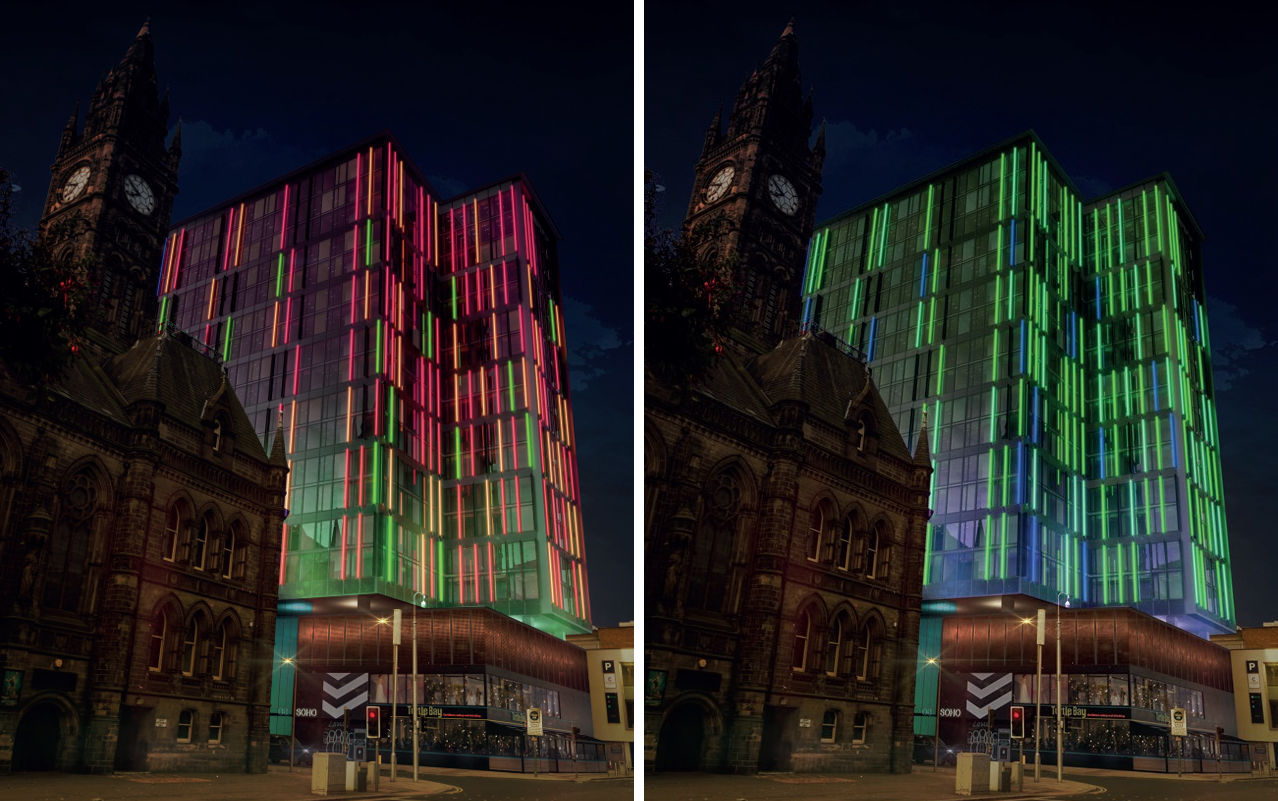
A proposal to bring back to life Middlesbrough’s iconic Centre North East – one of the tallest buildings in the North-east – has been announced today.
Middlesbrough Council has put forward a proposal to move staff from the crumbling Civic Centre into a completely renovated and re-energised Centre North East.
The authority previously planned to move staff into one of the new Grade A office blocks on Centre Square but that proposal was paused earlier this year by Mayor Andy Preston following his election in May.
Mr Preston said the new announcement, coupled with an announcement in the pipeline on tenants for the new offices, proved the new path was the right route to take.
He said: “My vision for the centre of Middlesbrough is that we create a place that is buzzing 24-hours-a-day and is an amazing place to live and work.
“Very soon we’ll be making announcements about brilliant tenants for the new offices which will start to really change the vibe of the town for the better.
“Centre North East is going to be a massive part of that – it is an absolutely iconic building but one which is standing empty.
“We can bring this giant beacon of Middlesbrough back to life, fill our new offices with good companies bringing well-paid jobs and possibly create new residential space on the Civic Centre site bringing more people into the town centre which we absolutely need.”
Since the Mayor announced that due to high level of interest in the new office blocks that the Council’s move would be re-thought, several developers have presented alternative accommodation for the authority.
Four developers submitted proposals, two for refurbishment of existing buildings and two for new builds.
As a result Theakston has been identified as the preferred bidder with their proposals for Centre North East and that proposal will be considered by the Council’s Executive this Friday (December 20).
The agreement is subject to due diligence and negotiation of acceptable Heads of Terms within a 10-week deadline commencing on December 20, 2019 and ending on February 28, 2020.
A report will then be prepared for the Executive to make a decision on the proposals.
Plans for a £62m Teesside housing project have been given the go-ahead.
Located in Middlesbrough, the plans consist of the construction of 350 mixed tenure two to four bedroomed homes to be built on a 29 acre site, adjacent to The James Cook University Hospital in the Brackenhoe area of the town.
Galliford Try Partnerships North acquired the site from Middlesbrough Council and Middlesbrough College, with the developer having also recruited partners for the project.
Thirteen will take 100 homes – 78 for affordable rent and 22 for shared ownership, whilst Sigma Capital will offer 80 properties through its Simple Life private rental brand. The remaining 170 homes will be for open market sale through Galliford Try’s housebuilding division, Linden Homes.
“This is an exciting venture for the area; it’s something different, offering homes for a variety of tenures, including new build homes for private rent,” said Sean Egan, managing director with Galliford Try Partnerships North.
“We are delighted that Thirteen and Sigma Capital are ready to join us on this initiative, which we have worked hard, for many months, to bring together. Securing two such specialists gives us confidence that this would be a very important addition to Middlesbrough’s housing offer – helping meet the need for homes of all tenures.”
Proposals for the conversion of a Middlesbrough office building into a hotel and apartment complex have been given the green light.
The plans were submitted to Middlesbrough Council, outlining proposals to convert the Vancouver House office building in to a 102-bed hotel and 26 one and two-bedroom apartments.
The scheme also includes allocation for a restaurant/café and a gym facility/ banqueting hall.
Changes of use will occur on the ground floor, with three retail units becoming a single space for a restaurant/cafe. The first floor will become a series of banqueting halls. The existing second to fourth floors will be used for the hotel, while the existing fourth to fifth floor will contain residential units.
There is a provision for 45 to 50 sheltered cycle spaces, with 28 off-street parking spaces provided within the existing site.
Vancouver House, which has accommodation over basement and six upper floors extending to circa 92,285 sq ft, is situated on the junction of Gurney Street and Corporation Road in Middlesbrough town centre.
The 1980s building is currently used as predominantly open plan office accommodation at the first to fifth floors, with a number of small retail / leisure units on the ground floor.
Plans have been drawn up for an exciting new railway station to revitalise Teesside’s transport links.
The proposed park and ride interchange between Nunthorpe and Guisborough is a joint project between Redcar & Cleveland and Middlesbrough Councils and the Tees Valley Combined Authority aimed at easing road congestion and improving access to East Cleveland
The new station – provisionally named Roseberry Parkway – will serve a population of around 70,000 people in East Cleveland, Guisborough, South Middlesbrough and parts of North Yorkshire.
The 21st century facility will bring together trains, buses, cycle provision and parking to create an integrated hub serving Guisborough and East Cleveland, Stokesley and villages in North Yorkshire.
In addition to existing trains from to Newcastle, Carlisle and Whitby, it is hoped services to Middlesbrough will increase to every half hour, while the number of daily trains travelling to Whitby could be doubled.
The two local authorities are currently working in partnership with Tees Valley Combined Authority, Arriva, Northern and Network Rail, with an outline business case due to be drawn up later this year.
Middlesbrough Mayor Andy Preston said: “Good transport links are vital for a vibrant and successful local economy, and that’s why it’s essential that we work together to find the right solutions.
“This exciting proposal is a fantastic example of that approach, creating an innovative and forward-thinking facility that will improve access to employment, education, healthcare and other services.
“In the long term it is also estimated the parkway station will help to divert at least 30,000 car trips every year from the ‘Marton Crawl’.”
Cllr Mary Lanigan, Leader of Redcar & Cleveland Borough Council, said: “This is fantastic news for the region and particularly for people living in the towns and villages of East Cleveland.
“One of our priorities is to improve public transport and provide better connectivity for everyone.
“There are some communities where this has been a challenge but this link will help provide a vital link to help people to work, study or access key services, such as healthcare.
“We are delighted to see these plans come to fruition and we will continue to develop further plans to improve transport links in East Cleveland.”
Middlesbrough South and East Cleveland MP Simon Clarke added: “This is a really exciting moment in our shared mission to deliver a lasting solution to traffic congestion in south Middlesbrough, while also improving transport links across East Cleveland.
“The opportunity to create a new station with both Park and Ride and proper interconnection with local bus services is a hugely ambitious scheme that I hope local people will warmly support.
“Both Andy and Mary have been a breath of fresh air since they became Mayor and Council leader respectively and we’ve resolved to work together to design the best possible scheme that makes it easier for people to get to school, work or the shops in our part of the Tees Valley.
“We’ll also be reaching out to Ben Houchen as the process moves forward so that he can help us to make the funding case to Transport for the North and the Department for Transport – but for today’s announcement our message is clear: there’s a plan, it’s a good one and we’re all looking forward to the next steps.”

Historic buildings in the heart of Middlesbrough are currently enjoying a new lease of life as part of regeneration of Albert North on Albert Road by Jomast.
Buildings including the former Court Chambers, Kitching Building and the Wilson’s Courtyard have been rejuvenated as part of the reinvention of Albert North that has seen Alkaline Kitchen and Pie Jackers join a range of independent brands on Albert Road.
As well as bringing the heritage landmarks back into use, Jomast have been working with Heritage Unlocked’s Dr Tosh Warwick and Teesside Archives to explore the history of properties in Albert North and have uncovered unique photographs and plans dating back to early twentieth century.
Modern day occupants of the buildings will follow in the footsteps of some of the key figures that have helped shape Middlesbrough over the centuries and have played an important role in the day-to-day life of Teessiders for decades.
Records dating back to the 1880s reveal tenants including London & Lancashire Insurance, Norwich Union, Bass Brewers and William Duncan, the architect of Redcar Town Clock.
By the early 1900s celebrated architect Robert Ridley Kitching’s practice was resident on Albert Road and would go on to be responsible for thousands of Teesside’s buildings and homes, including listed landmarks such as the Cargo Fleet Steel Company Offices, Christadelphian Hall and the United Reform Church on Linthorpe Road.
Accountants, coal merchants, publicans, shipping magnates and tailors are amongst the range of former occupants of the Albert North redevelopment properties including the Constantines, the family shipping dynasty pivotal in establishing Constantine College, the predecessor to Teesside University.
Plans held by Teesside Archives also reveal construction details of the locally listed Kitching Building, Middlesbrough’s most notable Art Deco style building, details of Air Raid shelters for the Admiralty, based in the premises during the Second World War, as well as previous renovations along Albert Road dating back to the 1930s. The use of the historic documents to explore the history of the buildings is the latest project to make use of the collections that have also been used to aid the regeneration of Middlesbrough Town Hall, Saltburn Cliff Lift and the Tees Transporter Bridge.
Dr Tosh Warwick said: “The regeneration of the heritage buildings follows the example of leading developments across the country that have been praised by Historic England for bringing a new lease of life to city centres.
“The history of the buildings has generated lots of interests both from new occupants and the wider public.”
Julie and Neil Fletcher from Pie Jackers said their decision to open an artisan bakery and diner at 17 Albert Road was inspired by the character of the impressive stone-fronted building which was originally the Court Chambers.
Julie said: “Middlesbrough is our home town and we’ve both walked down Albert Road and past these old Court Chambers a thousand times.
“As soon as we discovered the building was part of the Albert North regeneration we jumped at the chance to ‘piejack’ it.
“It’s a fantastic space and our refit will very much reflect Middlesbrough’s industrial heritage.”
Mark Hill, Commercial Property Director at Jomast, said: “Albert North is fast becoming a vibrant new business community set in the historic quarter of Middlesbrough, in the heart of the Tees Valley.
“We are very proud to be working with Middlesbrough Council on the regeneration of this area to make this community a wonderful place to work, drink and eat.”
· For more information on the properties available at Albert North visit www.albertnorth.co.uk
New contracts and two award nominations for innovative Teesside health and safety induction firm
A Teesside-based health and safety induction and contractor management firm is celebrating after powering ahead with a new contract and notching up two award nominations.
Intasite, based in Middlesbrough’s Boho One building, has recently delivered an innovative new project for energy firm EDF Renewables.
With 38 wind farm sites, County Durham-based EDF needed a solution when it came to managing site induction programmes for contractors and visitors.
Step in Intasite. Put simply, the Middlesbrough company specialises in offering tailor-made online programmes aimed at simplifying the induction process for companies operating security-conscious sites.
From the process sector to ports, offshore platforms to the construction, chemical and manufacturing industries UK and worldwide, the company has a software solution to help manage visitors easily and quickly.
The six-strong team, packed with digital and developer knowledge backed up by film and video expertise, customised their software system for EDF which included tools to provide necessary information before contractors and visitors even set foot on site.
It meant the whole induction process could be completed remotely and ahead of time, saving valuable business hours.
EDF aren’t the only ones benefiting from Intasite’s expertise. The company has been four years in the making and already clients include; PD Ports, mining company Sirius Minerals and Telefonica O2.
“The Intasite team have worked tirelessly with us to design and refine a bespoke and intuitive induction system for our on and offshore fleet of windfarms. The health and safety of our staff and external partners on site is our priority, and Intasite have worked closely with us to ensure a high standard of induction and internal management of the inductees. The system they have built has allowed us to target general and site-specific site information to the right people, record their responses and verify their competence, increasing the efficiency for all involved,” – Steve Hunter, asset manager, EDF Renewables
“The idea is that personnel or visitors to sites can be inducted from anywhere, which saves time and reduces costs,” says Andy Murphy, Intasite director.
“It is essentially about streamlining the induction process for secure sites.
“About five years ago, we identified there was a gap in the market for doing inductions remotely and we set about building the software to be able to offer companies the possibility to do that.
“The platform took us 18 months to develop.”
Intasite’s clever software can be utilised for any outcome – be it remote health and safety inductions, risk assessments, uploading insurances and qualifications or scanning a QR code to access a secure site.
Reminders can be sent when refreshers are due and a specially developed tool can also send instant messages or alerts to site personnel.
Site managers can see who has completed the necessary ‘paperwork’ and who is on site at any given time. What’s more, the system can be offered in multiple languages.
Their first client was Teesside’s PD Ports, says fellow director Danielle Bloom, and the business has developed from there with an exciting potential for growth in the coming years.
“We specialise in large projects that are quite complex,” she says. “The team we have are really good at what they do.
“Our USP is that our platform can be tailored to our clients and is designed to reflect what they do. We also offer site specific video production and animation of sites, mostly specialising in high hazard industrial sites.
“It has really started to take off in the last year. People are changing the nature of site work and how inductions can be done.”
Intasite was recently shortlisted in two categories in the FSB Celebrating Small Business Awards, gaining recognition in both Digital Innovation and Business and Product Innovation.
It was a feather in the cap for the firm which takes pride in the expertise and talent it has and what it can offer clients. They very much hope the exposure will help continue to showcase the unique product and services they can provide.
“For me, it’s about identifying something a client needs and coming up with a new solution to it,” adds Andy.
For more information, visit www.intasite.com.
Middlesbrough’s Grade A office development is already benefiting the local economy by more than £1m – before they have even been completed.
The Centre Square project, which will bring thousands of jobs to Middlesbrough’s city centre, is currently seeing the first two brand new office blocks being built. The scheme is being delivered by Ashall Projects.
Both buildings are on target and are expected to be complete by the end of the summer.
During construction, however, builders Bowmer and Kirkland have endeavoured to utilise local labour and the local supply chain.
Currently they have 27% of labour from within a five-mile radius and 57% from with a 20-mile radius.
The company have also reported that almost £1.15m has been spent directly within the local supply chain.
Cllr Charlie Rooney, Middlesbrough Council’s Deputy Mayor and Executive Member for City Centre Strategy, said: “We are absolutely delighted to see these figures from Bowmer and Kirkland.
“Whenever a major construction project like this takes place, we are often asked if we will be using local labour for the build.
“Due to the nature of the construction business that isn’t always possible, however it’s great to see that the majority of the labour is local.
“These new Grade A offices are one of the most important projects in Middlesbrough in memory and will bring thousands of jobs into our city centre.
“Those workers will then spend locally on leisure and retail which will in turn create more jobs.
“It is an economic circle to the top and when those Teessiders working on the offices walk through Middlesbrough’s city centre in five years’ time, they’ll be able to look around at a completely transformed city economy and say “we did this”.”
Mark Ashall, Director of Ashall Projects said: “It is really important to ensure we are facilitating construction spend at a local where possible. These numbers showcase exactly that which is brilliant.
“We remain on track with the development programme and look forward to seeing the first two buildings come to fruition.”
Middlesbrough’s Live Well Centre is set to expand by more than 50%, in a £1 million investment to further boost the provision of health and wellbeing services for the town’s residents, with the acquisition of two further floors at Dundas House in Middlesbrough town centre.
In a deal secured by Teesside independent commercial property consultants Dodds Brown, Middlesbrough Council is taking a new 10 year lease on a further 12,680 sq ft of office accommodation on floors five and six at Dundas House for The Live Well Centre which from this April (2019) will occupy more than 32,000 sq ft of space in the office building.
The Live Well Centre already provides a gym, studio, training kitchen, open IT facility, café area, group, craft, training and event rooms and office space, as part of its services to empower people to make positive choices to improve their health and wellbeing.
Plans for the new space will be subject to a public consultation, but will accommodate more innovative programmes to help guide people into work and education, and address financial and housing issues, empowering individuals and communities to sustainably improve their health and wellbeing. The plans include conferencing rooms, a meditation suite and more accommodation for complementary health and wellbeing businesses, charities and not-for-profit organisations which want to work with The Live Well Centre and its clients.
“The fantastic success of the first 18 months of The Live Well Centre clearly demonstrates a demand for integrated wellbeing space in central Middlesbrough. The combination of brilliant services, state-of-the-art facilities, easy access and collaborative working arrangements, has seen the centre receive a commendation from the Management Journal, achieve a Middlesbrough Council Team Award, and result in improved integration and access to a wide range of wellbeing services, including health, employment and social support,” says Julia Rostron, Executive Member for Adult and Social Care, Middlesbrough Council.
“The expansion will also open up exciting new opportunities for likeminded organisations to work alongside the more than 20 services currently based at the centre, including Change Grow Live, Groundwork North East and Cumbria, Princes Trust, Virgin Care and Starfish Health and Wellbeing.
“The growth of The Live Well Centre is a clear demonstration of Middlesbrough Council’s commitment to social regeneration and sets Middlesbrough apart as an area truly invested in innovative ways to improve the health and wellbeing of its residents.”
Richard Wilson, Senior Associate Partner at Middlesbrough-based Dodds Brown, secured the new lease on behalf of Dundas House and Shopping Centre landlord Contract Experts Limited. He says: “This is an important letting for both Middlesbrough Council and Dundas House and Shopping Centre. New users of the centre will further boost the weekly footfall in the shopping centre which already exceeds 70,000 per week, as well as attracting other wellbeing related organisations to take space in Dundas House and see more people based in The Live Well Centre using the shops and market units in Dundas Shopping Centre.”
Only two floors of office accommodation, each of up to 6,340 sq ft, remain available at Dundas House, with suites available from 200 sq ft upwards.
Work will start on refurbishing the new space in The Live Well Centre in April (2019) and is expected to be completed by Summer 2019.
The five Leaders of the Tees Valley’s Local Authorities have welcomed a £588million Combined Authority Investment Plan which will transform the economy and the lives of people across the region.
The Leaders and the Tees Valley Mayor yesterday unanimously approved the plan which sets out how the Tees Valley Combined Authority will invest money to grow the economy by £1.48billion and create 16,785 jobs over the next ten years.
The investment plan, which supports the delivery of the Combined Authority’s Strategic Economic Plan published in March 2017, includes £20million for a major transformational project based in each of the five Local Authority boroughs, and an Indigenous Growth Fund of £50million to improve and revitalise towns and communities.
And it approves the Combined Authority’s purchase, from Peel Holdings Limited, of 89% shareholding in Teesside International Airport and an adjacent piece of land with planning permission for 350 homes for a total of £40million.
It sets out how our economy will be transformed through major investments across six key themes including: transport; education, employment and skills; business growth; culture and tourism; research, development and innovation; investment in our towns and communities.
Business growth – £146million
Cllr Sue Jeffrey, Tees Valley Combined Authority Cabinet Member for Investment and Business Growth, said: “This Investment Plan is not just about cold, hard cash. It is about changing the future of Tees Valley, our economy, and improving the lives of the people who live here.
“This plan lays out the funding needed to create the jobs our residents need. It will support projects to attract and grow new businesses, as well as making sure we create an environment that encourages inward investment and gives start-ups and existing companies of all sizes the backing they need.
“We have outlined strategic priorities that we will target with investment, such as Stockton’s Northshore, Middlesbrough’s Boho and Revitalising Redcar, which will be critical to our plans. We have also earmarked £116.5million to unlock sites for business, including land on the South Tees Development Corporation.
“We are expecting to create 4,400 new jobs from business growth alone. Working across key sectors, this plan is not only good for businesses, but it will be good for those we’re really working to help – the people of our region – by driving new, accessible jobs and creating a fantastic place to invest, work and live.”
Transport – £257million
Cllr Stephen Harker, Deputy Tees Valley Mayor and Combined Authority Cabinet Member for Transport, said: “An integrated, reliable, fast and safe transport infrastructure is central to have Tees Valley truly reach its potential.
“We have made a lot of progress already but this plan helps us unlock even more funding for road, rail and air schemes to keep residents and freight moving. On the roads, we’ve agreed funding for preparation work for new Tees crossings, the Darlington bypass and improved connectivity along the A66 from A1(M) to Teesport, along with the previously announced funding for Hartlepool’s Western Growth Corridor.
“There will be investment to transform our key stations, Darlington and Middlesbrough, as well as cash to begin extending the TransPennine train service to Saltburn and for the study into upgrading the line into Teesport. We’ll also consider further schemes to improve accessibility to stations including Eaglescliffe, Nunthorpe Parkway, Hartlepool, Redcar Central and Billingham and upgrades to more.
“We know that, for some, public transport isn’t the answer to getting around. So the plan includes personalised travel support initiatives to ensure that jobs, wherever they are in Tees Valley, are available to all residents.
“One of the biggest transport projects included in the Plan is to bring Teesside International Airport back into public ownership and increase its user numbers tenfold. The entire Combined Authority Cabinet is committed to seeing it succeed and we look forward to delivering a thriving regional airport that will be an asset to be proud of.
“Top quality transport connections will help people to work, businesses to grow and visitors to discover what this wonderful region has to offer and with this Investment Plan, we’re on track to deliver just that.”
Education, employment and skills – £55million
Cllr Christopher Akers-Belcher, Tees Valley Combined Authority Cabinet Member for Education, Employment and Skills, said: “Helping people of all ages to learn, reach their potential and be given all the skills needed to get the jobs we’re creating is incredibly important.
“Our education, employment and skills investment takes in a wide range of areas for our learners, providers and businesses. Everything from skills for teachers and business challenge to technical education and addressing long-term unemployment.
“Our investment will, among other things, support education innovation and collaboration, develop a skills system for business growth, support careers and enterprise activity and those who want to take on or become apprentices.
“We have set cash aside to help fund the Northern School of Art Middlesbrough relocation and phase two of Hartlepool’s Innovation and Skills Quarter to train, attract and retain people in the creative industries and become a thriving area of excellence in the sector.
“On top of this, we expect £290million over ten years following the devolution of our adult education budget, now that we have taken responsibility for post-19 education. This will help us better target and deliver quality adult education to those who need it most.”
Culture and tourism – £60million
Mayor Dave Budd, Tees Valley Combined Authority Cabinet Member for Culture and Tourism, said: “We are one of the UK’s growing visitor destinations and big-name announcements like concerts by Take That and Jess Glynne alongside world-class sporting events such as the Great North CityGames and our Rugby League World Cup 2021 bid show we’re already punching above our weight.
“We can’t slow down in our bid to become City of Culture 2025 and the Investment Plan gives financial support to develop our ambition, as well as funding key activities, events and Hartlepool Waterfront and the Stockton and Darlington Railway Heritage Programme.
“Even just preparing for this bid will change Tees Valley for the better in the long term, with culture partners working closer than ever to attract new visitors to the region, boosting the tourist pound that many local shops, restaurants and businesses need to survive and spreading the word that we’re an exceptional destination.”
Research, innovation and development – £20million
Mayor Dave Budd, Tees Valley Combined Authority Cabinet Member for Innovation, said: “Building a greener economy is a priority for Government and we’re perfectly placed to capitalise on our skills, rich history and infrastructure to make sure we’re leading the way in industrial innovation and reducing carbon emissions.
“Our Investment Plan recognises our strengths in the advanced manufacturing, process and energy, healthcare and digital spheres. By focusing on energy production, storage and efficiency, carbon reduction, support for our supply chains and making this innovation commercialised, we can create the jobs of tomorrow and make sure these high-quality roles stay in the Tees Valley for years to come.”
Place (towns and communities) – £50million
Cllr Bob Cook, Tees Valley Combined Authority Cabinet Member for Housing and Regeneration, said: “We have five fantastic, diverse boroughs and we can’t lose sight of what makes each of our towns great.
“It’s great we’re investing £100million into transformative strategic projects across the five boroughs that will pay off for years to come. But to directly improve the day-to-day lives of the people of Tees Valley, as well as keep our home-grown talent in the area and encourage businesses to set up here, we need to look to more local schemes.
“That’s why, outside of all of our other investment, we have agreed an Indigenous Growth Programme of £50million, which will make up to £2million per year available for each of our five boroughs, for an initial five-year period.
“This cash will be used for vital activity which will have an immediate local impact but, together, will make Tees Valley a vibrant and welcoming place for all.”
Read the full Tees Valley Combined Authority Investment Plan 2019-29.
A ten-year plan to transform the economy of the Tees Valley has been approved by the Tees Valley Mayor and the Leaders of the region’s five councils today (24 January).
The Tees Valley Combined Authority’s refreshed investment plan outlines how £588million worth of spending between 2019-2029 will support the creation of 16,785 jobs and an additional £1.48billion to the area’s economic output.
The Tees Valley Investment Plan sets out how our economy will be transformed through major investments across six key themes including: transport; education, employment and skills; business growth; culture and tourism; research, development and innovation; investment in our towns and communities.
It outlines how £146.5million will be used to support business growth and unlock sites for development. This includes the purchase of the majority of developable land at the South Tees Development Corporation site.
The investment plan, which supports the delivery of the Combined Authority’s Strategic Economic Plan and was first launched in March 2017, includes £20million for a major transformational project based in each of the five Local Authority boroughs, and an Indigenous Growth Fund of £50million to improve and revitalise towns and communities.
And it approves the Combined Authority’s purchase, from Peel Holdings Limited, of 89% shareholding in Teesside International Airport and an adjacent piece of land with planning permission for 350 homes for a total of £40million. The Mayor today confirmed that the proposed housing development will not progress.
Tees Valley Mayor Ben Houchen and each of the five Local Authority Leaders voted to support the refreshed investment plan at a specially convened meeting of the Combined Authority’s Cabinet, in Middlesbrough, today.
